
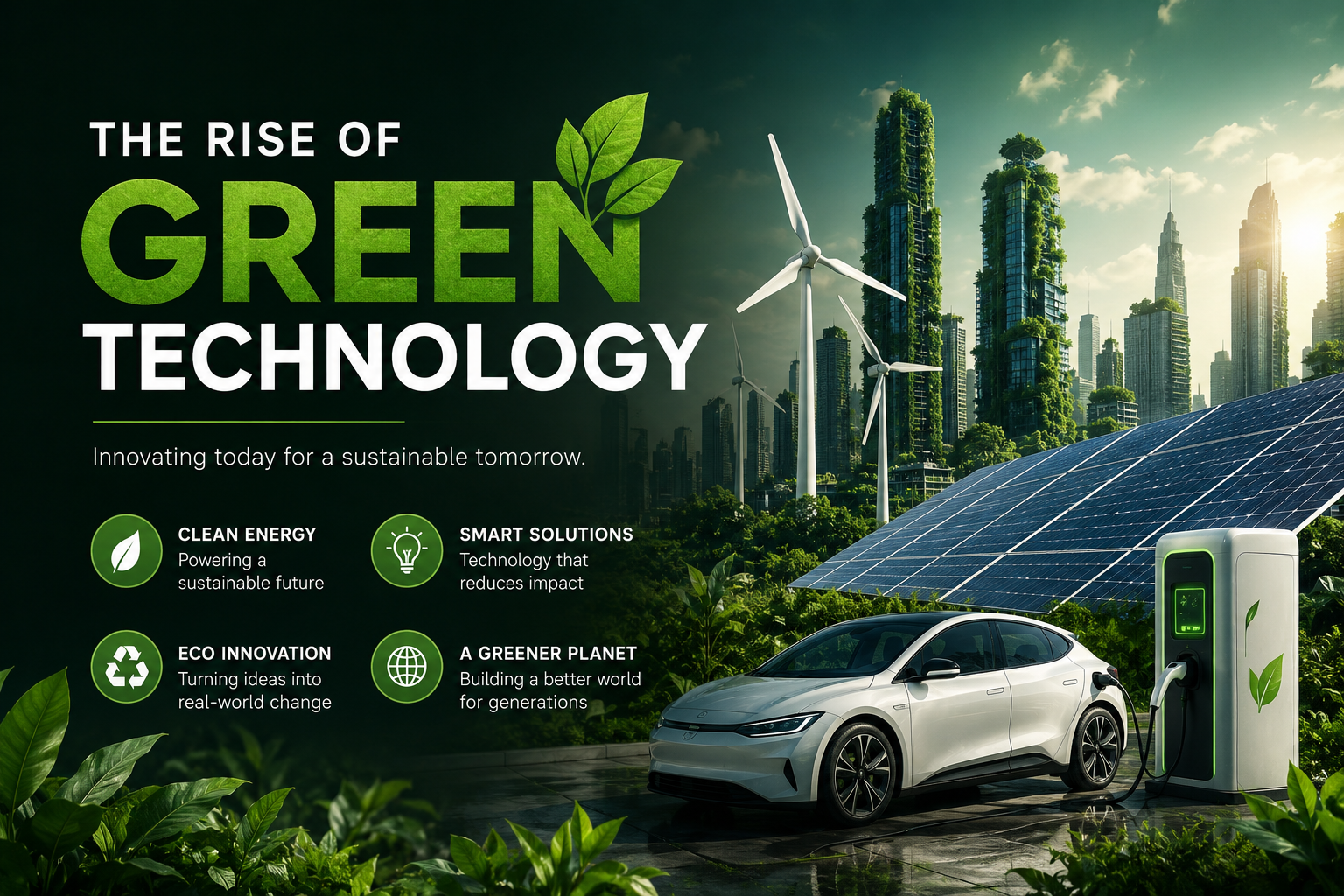

The Future Is Green: How Innovation Is Building a More Sustainable Future
The Future Is Turning Green
A few decades ago, the idea of technology helping to save the planet sounded more like a science fiction than reality. Today, it is happening all around us. Solar panels power homes, electric vehicles quietly replace gasoline cars, smart devices reduce electricity waste, and businesses are finding cleaner ways to manufacture products.
As climate change, pollution, and resource shortages become increasingly urgent global challenges, green technology has emerged as one of the world’s most important innovations. Rather than choosing between economic growth and environmental protection, modern technology is proving that both can work together.
Green technology is not simply about creating eco-friendly gadgets. It is about designing the way we generate energy, travel, build cities, produce food, and even dispose waste. These innovations aims to reduce environmental harm while improving efficiency, lowering costs, and creating healthier communities.
In this article, we will explore what green technology is, why it is growing rapidly, the industries it is transforming, the challenges it faces, and what the future holds for a greener world.
What Is Green Technology?
Green technology, often called clean technology (cleantech) or environmental technology, refers to products, systems, and innovations designed to minimize negative impacts on the environment.
Its primary goals include:
- Reducing pollution
- Conserving natural resources
- Lowering greenhouse gas emissions
- Improving energy efficiency
- Supporting sustainable development
Unlike traditional technologies that often consume large amounts of fossil fuels and produce harmful emissions, green technologies prioritize long-term environmental health.
Examples include:
- Solar energy
- Wind power
- Electric vehicles
- Smart energy systems
- Water purification technologies
- Green buildings
- Recycling innovations
- Sustainable agriculture
Why Green Technology Is Growing So Quickly
Several factors have accelerated the rise of green technology.
1. Climate Change
Extreme weather events, rising global temperatures, droughts, floods, and melting glaciers have increased awareness of climate change. Governments and businesses are investing heavily in technologies that reduce carbon emissions.
2. Rising Energy Costs
Traditional energy sources can be expensive and unpredictable. Renewable energy technologies such as solar and wind provide long-term cost savings while reducing dependence on fossil fuels.
3. Consumer Awareness
Today’s consumers are more environmentally conscious than ever. Many prefer companies that use sustainable packaging, renewable energy, and eco-friendly manufacturing processes.
Businesses have responded by adopting greener technologies to meet customer expectations.
4. Government Policies
Many countries encourage clean energy through tax incentives, grants, emissions regulations, and renewal energy targets. These policies continue to drive investment in green innovation.
Renewable Energy Is Leading the Revolution
Perhaps the biggest success story in green technology is renewable energy.
Unlike coal, oil, and natural gas, renewable energy sources naturally replenish themselves.
These include:
Solar Energy
Solar panels convert sunlight into electricity.
Benefits include:
- Lower electricity bills
- Reduced carbon emissions
- Low maintenance costs
- Long lifespan
As manufacturing costs continue to fall, solar power has become increasingly affordable for homeowners and businesses.
Wind Energy
Wind turbines generate electricity using natural wind currents.
Large wind farms now power millions of homes around the world while producing almost no direct greenhouse gas emissions.
Hydroelectric Power
Hydropower uses flowing water to generate electricity.
Although one of the oldest renewable energy sources, modern hydroelectric systems have become more efficient and environmentally friendly.
Electric Vehicles Are Changing Transportation
Transportation has traditional been one of the largest contributors to carbon emissions.
Electric vehicles (EVs) are changing that.
Unlike gasoline-powered cars, EVs use rechargeable batteries instead of internal combustion engines.
Advantages include:
- Zero tailpipe emissions
- Lower fuel costs
- Reduced maintenance
- Quieter operation
- Improved energy efficiency
As charging infrastructure expands and battery technology improves, electric vehicles are becoming increasingly practical for everyday drivers.
Public transportation is also becoming greener through electric buses, trains, and delivering vehicles.
Smart Homes Are Saving Energy
Modern homes are becoming smarter and greener.
Smart technology helps homeowners monitor and reduce energy consumption automatically.
Examples include:
- Smart thermostats
- Motion-sensitive lighting
- Smart power outlets
- Energy monitoring systems
- Automated heating and cooling
These devices reduce unnecessary electricity usage while lowering utility bills.
Even small improvements across millions of homes can significantly reduce national energy consumption.
Green Buildings Are Reshaping Cities
Building account for a large portion of global energy use.
Green architecture focuses on reducing environmental impact through smarter design and construction.
Features often include:
- Energy-efficient insulation
- Solar roofing
- Rainwater harvesting systems
- Natural ventilation
- LED lighting
- Sustainable building materials
Many modern office buildings are designed to consume far less electricity than traditional structures while providing healthier indoor environments.
Sustainable Agriculture Through Technology
Agriculture is also benefiting from green innovation.
Farmers now use advanced technology to grow more food while conserving resources.
Examples include:
Precision Farming
GPS, sensors, drones, and artificial intelligence help farmers:
- Apply water only where needed
- Reduce fertilizer waste
- Detect crop diseases early
- Increase harvest efficiency
Vertical Farming
Instead of spreading horizontally across large areas, crops are grown vertically inside controlled environments.
Benefits include:
- Less land usage
- Reduced water consumption
- Year-round production
- Fewer pesticides
Recycling Technology Is Becoming Smarter
Traditional recycling often struggles with sorting different materials.
New technologies improve recycling through:
- AI-powered waste sorting
- Robotics recycling systems
- Chemical recycling
- Plastic recovery innovations.
Some recycling facilities now use computer vision systems capable of identifying hundreds of materials within seconds.
This increase recycling rates while reducing landfill waste.
Artificial Intelligence Supports Sustainability
Artificial intelligence is becoming a powerful partner in environmental protection.
AI can analyze massive amounts of environmental data far faster than humans
Applications include:
- Predicting weather patterns
- Monitoring wildlife populations
- Detecting illegal deforestation
- Optimizing power grids
- Reducing factory energy usage
- Managing water resources
By making systems more efficient, AI helps reduce unnecessary energy consumption.
Green Technology in Everyday Life
Many people already use green technology without realizing it.
Examples include:
- LED light bulbs
- Rechargeable batteries
- Smart appliances
- Electric bicycles
- Solar-powered security lights
- Energy-efficient air conditioners
- Digital documents that reduce paper use
- Water-saving showerheads
Small changes made by millions of people can create significant environmental benefits.
Economic Benefits of Green Technology
Green technology does not only protect the environment—it also strengthens economies.
Benefits include:
Job Creation
The renewable energy industry creates millions of jobs in:
- Engineering
- Manufacturing
- Construction
- Installation
- Research
- Maintenance
Lower Operating Costs
Businesses that improve energy efficiency often reduce long-term operating expenses.
Innovation Opportunities
Green technology has become one of the fastest-growing sectors for startup and investors.
Many companies are developing new batteries, carbon capture systems, sustainable packaging, and energy storage solutions.
Challenges Facing Green Technology
Despite impressive progress, several obstacles remain.
High Initial Costs
Although green technologies often save money over time, the upfront investment can be expensive.
Solar installations, electric vehicles, and smart home upgrades may require significant initial spending.
Infrastructure Limitations
Some regions still lack:
- EV charging stations
- Renewable energy grids
- Battery storage systems
- Recycling facilities
Expanding this infrastructure will require continued investment.
Rare Materials
Some green technologies depend on minerals such as lithium, cobalt, and rare earth elements.
Mining these resources responsibly remains an important environmental challenge.
The Future of Green Technology
The coming years promise even greater innovation.
Emerging technologies include:
- Hydrogen-powered transportation
- Carbon capture systems
- Sustainable aviation fuel
- Advanced battery storage
- Ocean energy
- Biodegradable electronics
- Smart power grids
- Net-zero buildings
Researchers are also exploring new materials that are lighter, stronger, and more environmentally friendly.
As technology advances, green solution are expected to become more affordable and widely available.
How Individuals Can Support Green Technology
Everyone has a role to play in creating a more sustainable future.
Simple actions include:
- Using energy-efficient appliances
- Turning off unused electronics
- Choosing reusable products
- Recycling properly
- Supporting environmentally responsible companies
- Using public transportation when possible
- Considering renewable energy options
- Learning about sustainable technologies
Individual choices may seem small , but together they contribute to meaningful environmental progress.
Final Thoughts
Green technology represents more than a trend—it is a fundamental shift in how society approaches innovation and sustainability. From renewable energy and electric vehicles to smart homes, sustainable farming, and AI-powered environmental solutions, these technologies are helping reduce pollution, converse resources, and improve everyday life.
The transition to a greener future will not happen overnight, and challenges such as infrastructure, affordability, and resource management remain. However, continued investment, specific breakthroughs, and growing public awareness are accelerating progress.
As individuals, businesses, and governments embrace cleaner technologies, the future looks increasingly sustainable. Green technology is not just protecting the planet for future generations, it is creating smarter, healthier, and more resilient communities today. The rise of green technology is not only changing how we live but also redefining what progress looks like in the 21st century.