

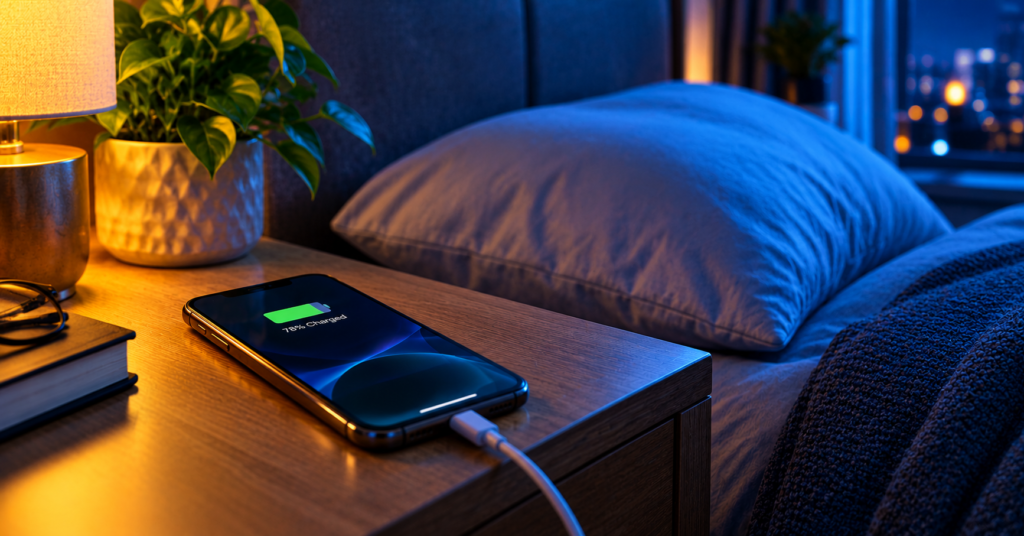
 What Really Happens to Your Phone When You Charge It Overnight?
Every night, millions of people perform the same little ritual: They plug their phones into chargers, place them beside their beds, and go to sleep. By morning, the battery is at 100%, ready for another day.
It seems harmless enough. After all, your phone is designed to recharge, right?
But what if the way you charge your phone affects how long its battery last? Does leaving it plugged in for seven or eight hours damage it, even after the battery is full.
The truth is more interesting than the warnings you may have heard. Charging your phone overnight is generally safe, but certain charging habits can contribute to battery ageing over time. Understanding what happens behind that glowing screen can help you protect your battery without worrying about every percentage point.
What Happens When Your Phone Reaches 100%?
Let us clear up one common misconception: Modern smartphones do not simply keep forcing electricity into a full battery all night.
Most smartphones use rechargeable lithium-ion batteries and built-in charging management systems. These systems monitor the battery and regulate how much power it receives.
When the battery reaches its target charge, the phone reduces or stops normal charging. If the battery level drops slightly while it remains connected, the system may draw a little power to maintain the charge.
So, your phone is not endlessly filling up like a water tank with a broken tap.
However, there is an important distinction between preventing overcharging and preventing battery ageing. Your phone’s charging protections help manage the charging process, but they cannot stop the battery’s chemistry from gradually changing as it ages.
That brings us to the real question: If overnight charging is generally safe, what should you actually worry about?
The Real Reason Your Phone Battery Gets Weaker
Your phone battery does not suddenly become useless because you left it charging overnight once. Battery capacity normally declines gradually through everyday use, charging cycles and the passage of time.
Three factors deserve particular attention.
1. Heat: The Battery’s Biggest Enemy
Think about what happens when you leave a phone in direct sunlight on a hot afternoon. It can become uncomfortably warm, and you may even receive a temperature warning.
Heat is not just uncomfortable for your phone. High temperatures can accelerate the chemical ageing of lithium-ion batteries.
Charging can generate heat naturally. Running demanding games, using power-hungry applications or placing your phone under a a pillow while it charges can make the situation worse.
Imagine plugging in your phone at bedtime and sliding it beneath your pillow to keep the screen light from distributing you. You may have solved the lighting problem, but you have also created a space where heat can become trapped.
The better habit: Charge your phone on a hard, stable, well-ventilated surface. Keep it away from direct sunlight, blankets and pillows.
2. Spending Too Much Time at 100%
A full battery feels reassuring. Nobody wants to leave home with 18% remaining and spend the afternoon searching for a power outlet.
Nevertheless, lithium-ion batteries generally experience more stress when kept at a very high charge level for extended periods.
This does not mean charging to 100% is dangerous or that you should immediately unplug your phone every time it reaches full charge. It simply means that spending many hours fully charged, night after night, may contribute to gradual battery wear.
Some smartphones offer optimized charging, adaptive charging or an adjustable charging limit. Depending on the model, these features can delay reaching 100% or limit charging to a selected percentage.
If you usually have easy access to a charger, an 80% limit may help preserve battery health over time. If you need a full charge for a long journey or a busy day, charging to 100% is perfectly reasonable.
The goal is to find a practical balance, not to turn your battery percentage into a nightly source of anxiety.
3. Using Unreliable Chargers
That extremely cheap charger at the roadside may look like a bargain. But if it is poorly made, counterfeit or damaged, it can pose a safety risk.
Modern phones have productive charging systems, but those systems cannot guarantee safety when every part of the charging setup is faulty.
Use a reputable charger and a compatible cable. Replace damaged accessories, and stop using a charger that smells burnt, sparks or becomes unusually hot.
Saving a little money on a charger is not worth risking an expensive phone–or your safety.
Should You Charge Your Phone to 80% Instead of 100%
You may have heard that the secret to a long-lasting battery is never charging beyond 80%. There is some truth behind this advice, but it is not a universal rule.
Keeping a lithium-ion battery away from the highest and lowest charge levels can reduce certain types of battery stress. An 80% charging limit may therefore be useful if you want to prioritize long-term battery health.
But consider your daily routine. If you spend hours away from electricity, restricting your phone to 80% might leave you struggling to get through the day.
In that situation, a full charge makes sense.
Think of the 80% limit as an optional battery-preservation feature, not a law that every smartphone owner must follow. Use it when convenient, and charge fully when you need the extra power.
Is It Bad to Leave Your Phone Charging All Night?
For most modern smartphones in good condition, overnight charging with a reliable charger is generally safe.
You do not need to switch off your phone before charging it, and you do not need to unplug it the instant the battery reaches 100%.
However, a few sensible precautions matter:
- Enable optimized charging: Check your battery settings for optimized, adaptive or smart charging features.
- Keep your phone cool: Avoid charging under pillows, blankets or in hot environments.
- Use a reliable charger: Choose compatible, reputable charging accessories.
- Avoid frequent deep discharges: You do not need to drain a modern lithium-ion battery to 0% before recharging.
- Pay attention to warning signs: If your phone becomes extremely hot, develops a swollen battery or shows physical damage, stop using it and seek professional assistance.
Also, do not assume that a phone is safe simply because it has stopped charging normally. A damaged battery or faulty accessory can still present a risk.
So What Should You Do Tonight?
You do not have to abandon your overnight charging routine out of fear. Modern smartphones are designed to manage charging, and leaving a properly functioning phone connected overnight is generally not a problem.
The bigger concern is the combination of heat, prolonged high charge levels and poor-quality charging equipment.
If you want your battery to last longer, keep your phone cool, use battery protection features where available, and avoid unnecessary charging extremes.
Remember, every rechargeable battery ages eventually. Even with excellent habits, its capacity will gradually decline.
The aim is not to keep your battery perfect forever. It is to avoid habits that cause unnecessary wear while getting the most out of the phone you already own.
So tonight, when you plug in your phone, ask yourself a better question than whether it will reach 100%: Am I charging it safely?
That simple change in thinking can do more for your battery than worrying about every minute it spends connected to a charger.