
 The Invisible Partner: How Digital Twin Technology Is Changing the Way We Build, Predict, and Innovate
On the evening of April 13, 1970, the calm inside NASA’s Mission Control was shattered by a simple but terrifying message from space:
“Houston, we have a problem”
More than 320,000 kilometers from Earth, the Apollo 13 spacecraft had suffered an explosion that crippled the mission. In an instant, what had begun as another journey to the moon has become a desperate fight for survival. Every decision mattered. Any mistake could cost three astronauts their lives.
Back on Earth, engineers did not rely on guesswork. Instead, they turned to an identical version of the spacecraft on the ground. By recreating the same conditions, testing different solutions and studying how the systems behaved, they were able to understand the problem without putting the astronauts in greater danger. That process helped guide the crew safely home and became one of the greatest engineering rescues in history.
Although the phrase digital twin did not yet exist, the idea behind it was already taking shape: create a faithful representation of a real object, observe how it behaves, and use that knowledge to make better decisions.
Fast-forward more than fifty years ago, that once revolutionary concept has evolved into one of the most powerful technologies of the digital age. Today, digital twins are helping doctors study the human heart before surgery, allowing manufacturers to to detect equipment failures before they happen, enabling cities to improve traffic flow, and giving engineers the ability to test ideas in a virtual world before making costly changes in the real one.
In many ways, a digital twin is like having an invisible partner—one that never sleeps, constantly learns, and quietly watches over its physical counterpart. It collects information, identifies patterns, predicts problems, and provides insight that would otherwise remain hidden.
As industries continue to embrace artificial intelligence, the Internet of Things(IoT), cloud computing, and advanced data analytics, digital twins are becoming far more than digital replicas. They are evolving into intelligent systems that help people work smarter, reduce waste, improve safety, and make more informed decisions.
But what exactly is a digital twin? How did it evolve from a concept inspired by space exploration into a technology shaping factories, hospitals, smart cities, and even healthcare? And why do many experts believe it will become one of the defining technologies of the coming decades?
Let us explore the story behind digital twin technology and discover why its impact extends far beyond the digital world.
What Is Digital Twin Technology?
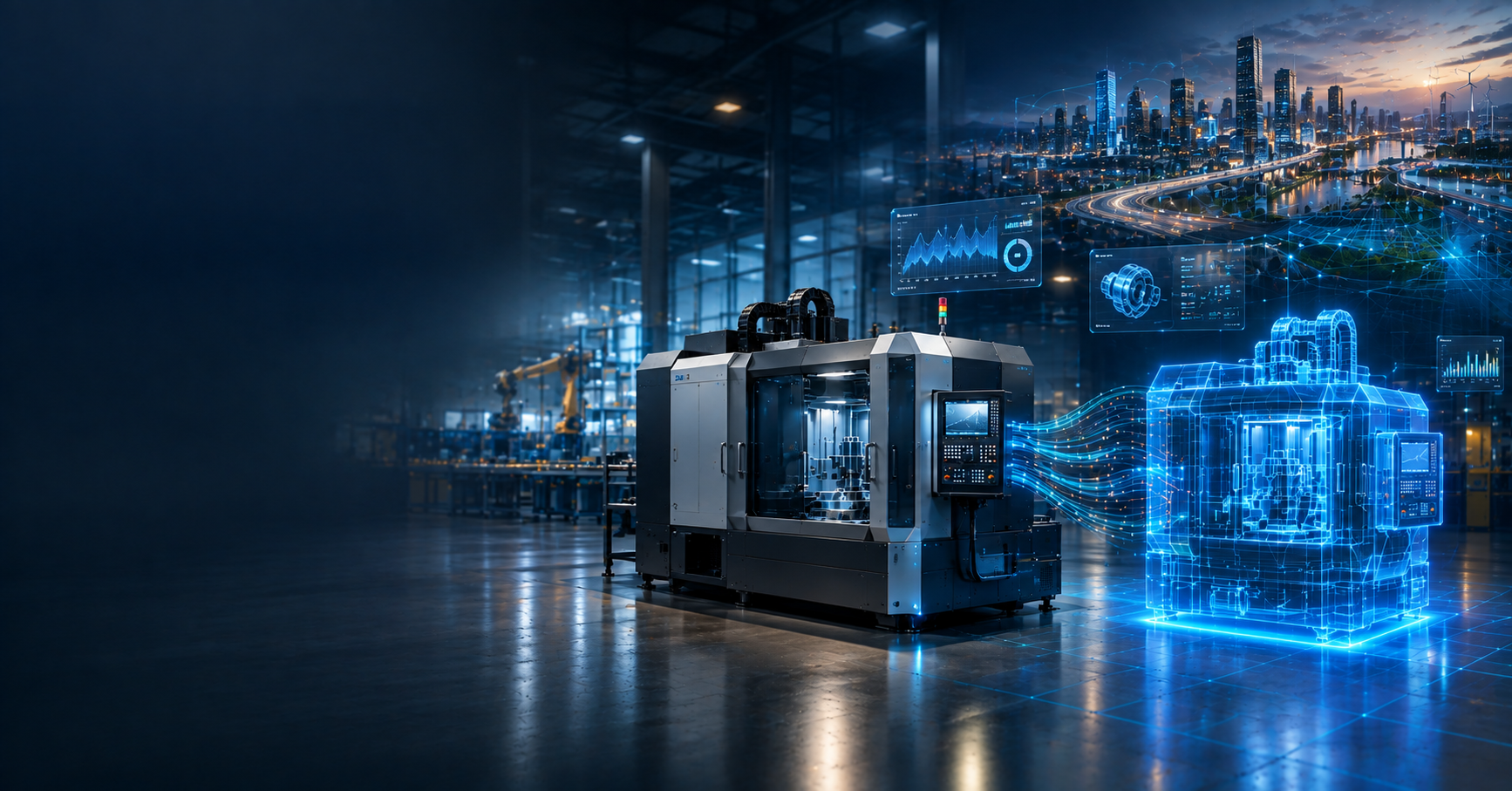
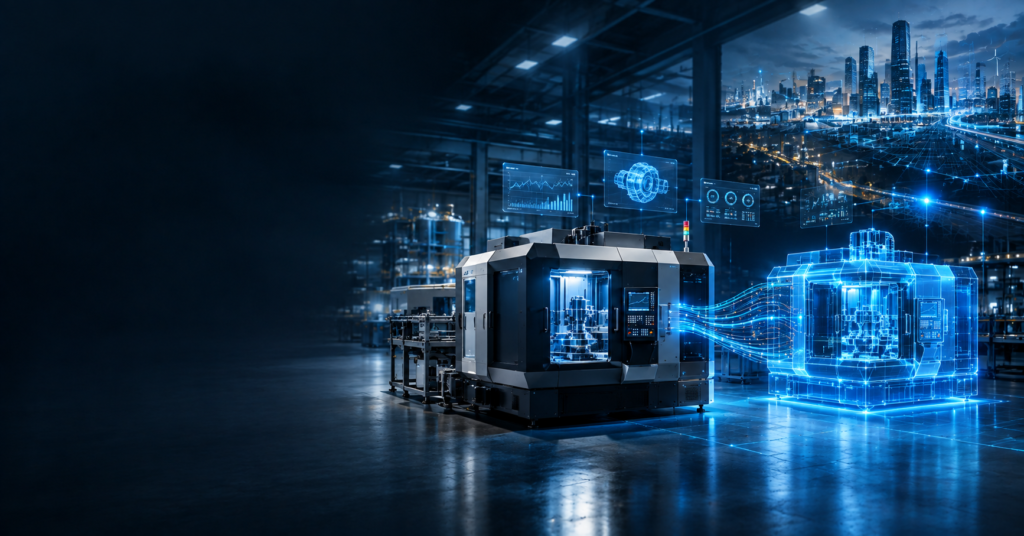
At its core, a digital twin is a living digital representation of a real-world object, system, or process. Unlike a static blueprint or a three-dimensional model, it continuously receives data from its physical counterpart, allowing it to reflect real-world conditions as they change.
Think if it as a bridge between the physical and digital worlds. Sensors attached to a machine, building, vehicle, or medical device collect information such as temperature, pressure, movement, energy consumption, or location. That information is transmitted to a digital model, which updates itself in real time. As conditions change in the physical world, the digital twin changes alongside it.
This continuous flow of information makes a digital twin much more than a visual copy. It can monitor performance, detect unusual behavior, predict future issues, and even recommend the best course of action before problems become serious.
Imagine owning a car that quietly tells you, weeks before a breakdown, that one if its engine components is beginning to wear out. Or picture a hospital where medical equipment can predict maintenance needs before it fails during an emergency. These are not futuristic fantasies—they are practical applications of digital twin technology that are already improving lives around the world.
One of the biggest misconceptions is that a digital twin is simply a computer simulation. While both involve virtual models, they are fundamentally different.
A traditional simulation represents a specific situation based on predefined assumptions. Once the simulation ends, the model stops evolving unless new information is entered manually.
A digital twin, however, never truly stops learning. It remains connected to its physical counterpart through a continuous stream of data, adapting as new conditions emerge. This dynamic relationship allows it to reflect reality with remarkable accuracy and provide insights that static models simply cannot.
In essence, if a simulation is like taking a photograph, a digital twin is like watching a live video stream—constantly changing, constantly updating, and continuously revealing new information.
This ability to mirror reality has made digital twins an essential tool across industries. Manufacturers use them to improve production lines, airlines monitor aircraft engines during flights, energy companies optimize wind turbines, and healthcare providers are beginning to explore digital twins for personalized treatment planning.
What started as an idea rooted in space exploration has grown into a technology capable of transforming nearly every sector of modern society. As the digital and physical worlds become increasingly connected, the role of digital twins will only continue to expand.
From Spacecraft Replicas to Digital Twins
The story of digital twins did not begin with cloud computing, artificial intelligence, or smart sensors. In fact, some of the ideas behind the technology existed long before the modern Internet.
During the early years of space exploration, engineers faced a problem that sounds surprisingly familiar today: How do you understand what is happening to something you cannot physically reach?
NASA engineers developed physical replicas of spacecraft and their systems on Earth. These replicas allowed teams to recreate conditions in space and investigate potential problems without experimenting on the actual spacecraft.
The Apollo 13 mission demonstrated the value of this approach dramatically. When an oxygen tank exploded and damaged the spacecraft, engineers on Earth had to find solutions using the equipment and information available to them. They recreated conditions on the ground and worked through possible solutions before communicating instructions to the astronauts.
The technology available at the time was nowhere near what we have today. There was no smartphones, modern cloud platforms, or sophisticated machine-learning systems constantly analyzing streams of sensor data. Yet the underlying principle was already there: represent the physical world somewhere else so it can be studied, understood, and improved.
Decades later, that principal began taking a digital form.
The term digital twin is widely associated with engineer and researcher Michael Grieves, who introduced the concept in the early 2000s in the context of product lifecycle management. The idea was to maintain a digital representation of a physical product throughout its life—from design and manufacturing to operation and eventual retirement.
As computing power improved and connected sensors became cheaper, the concept became much more practical.
The rise of the Internet of Things(IoT) was particularly important. Machines could now collect information about themselves and send that information to software platforms. Cloud computing provided somewhere to store and process enormous quantities of data. Advances in analytics and artificial intelligence then made it possible to interpret that information and identify patterns.
The digital twin had finally gained something it’s early predecessors lacked: a continuous connection to reality.
So, How Does a Digital Twin Actually Work?
The easiest way to understand a digital twin is to think of it as a conversation between a physical object and its digital counterpart.
The physical object produces information.
Sensors collect that information.
A network transfers it.
Software processes it.
The virtual model reflects what is happening.
Analytics can then help people understand what might happen next.
For instance, consider a large industrial machine inside a factory.
During normal operation, sensors attached to the machine might monitor its temperature, vibration, pressure, speed, and energy consumption.
Normally, these numbers might seem like nothing more than a collection of measurements.
But when they are continuously fed into a digital twin, they began to tell a story.
Suppose the machine’s vibration gradually increases over several weeks. The digital twin can compare that change with previous operating patterns and identity it as a possible warning sign.
Instead of waiting until the machine breaks down, engineers can inspect it and potentially replace a worn component.
That is one of the most valuable ideas behind digital twins: moving from reacting to problems towards anticipating them.
The Basic Digital Twin Cycle
A typical system can be understood through four simple stages.
1. The physical world
There is a real object, machine, building, vehicle, process, or system that needs to be monitored.
2. Data collection
Sensors and connected devices gather information about what is happening.
3. Digital representation
The information is sent to a virtual model that represents the physical counterpart.
4. Analysis and action
Software, analytics, and sometimes AI examine the information. Humans or automated systems can then use those insights to make decisions.
The cycle continues as new information arrives.
This is what makes a digital twin different from an ordinary digital model. It is not created once and forgotten. It is designed to evolve alongside the thing it represents.
What Makes a Digital Twin Different From a 3D Model?
This distinction is important because the two are often confused.
A 3D model might show you exactly what a building, aircraft, or machine looks like. It can be incredibly detailed, but it does not necessarily know what is happening to the real object.
A digital twin goes further.
Imagine a digital model of a wind turbine. The model can show the shape and location of its components. But a digital twin can also receive information about wind speed, temperature, blade movement, energy production, and mechanical stress.
The model shows what something looks like.
The digital twin can help explain what it is doing.
The difference is at the heart of the technology.
The Different Types of Digital Twins
Not every digital twin represents an entire factory or city. The scale can vary considerately
1. Component Twins
These focus on individual parts of a larger system.
For example, engineers might create a digital representation of a turbine blade, battery, engine component, or pump.
Monitoring individual components can help identify wear and unusual behavior before they affect the larger system.
2. Asset Twins
An asset twin represents a complete physical object made up of multiple components.
An aircraft engine is a good example.
Instead of studying only one component, engineers can examine how different parts work together and how the entire engine performs.
3. System or Unit Twins
Here, several connected assets are represented together.
A manufacturing line, for instance, might contain dozens of machines. A system-level twin can show how those machines interact and where a problem in one area might affect another.
This can help organizations understand the bigger picture rather than examining each machine separately.
4. Process Twins
This is where things become even broader.
A process twin represents an entire workflow or operation.
Consider an airport. Rather than focusing on one aircraft, a process twin could model the movement of passengers, baggage, aircraft, security operations, and ground services.
The goal is to understand how the complete process behaves and where improvements could be made.
Where Are Digital Twins Being Used?
One reason digital twin technology has attracted so much attention is its flexibility. It is not restricted to one industry.
Manufacturing
Factories are among the biggest users of digital twins.
Manufacturing can create virtual representations of machines and production lines to monitor performance, test changes, reduce downtime, and identify potential maintenance issues.
Before physically changing a production process, engineers can test different scenarios digitally.
That can save both time and money.
Healthcare
Healthcare is opening another fascinating chapter for the technology.
Digital twins can be used to represent medical equipment, hospital environments, biological systems, and potentially aspects of individual patients.
Researchers are exploring how detailed patient models could eventually support more personalized healthcare by allowing doctors to examine how different treatments might affect a particular patient.
It is an area that requires careful attention to privacy, medical accuracy, and ethics, but its potential is enormous.
Transportation and Aviation
Aircraft, trains, ships, and other complex vehicles contain thousands of components that must work together.
A digital twin can help engineers monitor performance, understand wear, plan maintenance, and improve designs.
Instead of discovering a problem only after a component fails, organisations can use data to look for early warning signs.
Smart Cities
The idea becomes even more ambitious when the digital twin represents an entire city.
A city-level digital twin could combine information about roads, buildings, public transportation, energy consumption, weather, and other infrastructure.
Planners could then simulate different scenarios.
What might happen if traffic patterns changed?
How would a new building affect surrounding infrastructure?
What areas might be vulnerable to flooding?
Rather than experimenting directly on a busy city, planners can explore possibilities in a virtual environment first.
Energy
Wind farms, solar installations, power plants, and electricity grids can also benefit from digital twins.
For renewable energy in particular, changing environmental conditions can have a major effect on performance. Digital representations can help operators understand how equipment behaves under different conditions and identify opportunities for better efficiency.
Why Does Digital Twin Technology Matter?
At first glance, creating a digital copy of something may sound like an expensive technological exercise.
The real value, however, is not the copy itself.
It is the insight that comes from the connection between the physical and digital worlds.
Digital twins can help organizations:
- Detect problems earlier
- Reduce equipment downtime
- Improve maintenance
- Test ideas before implementing them
- Reduce waste
- Improve product quality
- Increase operational efficiency
- Make better-informed decisions
- Improve safety
- Understand complex systems
Perhaps the most important benefit is the ability to ask “what if?” without immediately taking risks in the real world.
What if production increased by 20 percent?
What if a machine operated under higher temperature?
What if traffic were redirected through another route?
What if a component were replaced with a different design?
A well-designed digital twin can help explore these possibilities before committing valuable resources.
But Digital Twins Are Not Perfect
Like every technology, digital twins come with limitations.
Creating and maintaining a sophisticated digital twin can be expensive. Organizations may need sensors, connectivity, computing infrastructure, specialized software, and skilled professionals.
There is also the question of data quality.
A digital twin is only as useful as the information feeding it. If sensors provide inaccurate or incomplete data, the virtual representation may produce misleading results.
Security is another major concern. A digital twin may contain detailed information about valuable machinery, building, or business operations. If that information is poorly protected, it could become a target for cyberattacks.
Privacy becomes particularly important when digital twins are applied to healthcare of other areas involving personal information.
So, despite its futuristic appearance, successful digital twin technology depends on something very ordinary: good data, responsible management, and people who know how to use the information wisely.
What Does the Future Hold?
The next chapter of digital twins will likely be shaped by the technologies surrounding them.
Artificial intelligence can help these systems interpret enormous amount of information and identify patterns that humans might overlook.
Faster networks can make communication between physical assets and their digital counterparts quicker.
Edge computing can allow information to be processed closer to where it is generated rather than sending everything to a distant data center.
More advanced sensors can provide increasingly detailed information about the physical world.
Together, these technologies could make digital twins more accurate, responsive, and useful.
We may eventually see increasingly sophisticated digital representations of factories, transportation networks, buildings, energy systems, and entire urban environments.
The fascinating part is that the technology does not replace the physical world.
It gives us another way to understand it.
The Bigger Picture
From the spacecraft replicas of the space age to today’s connected virtual models, the story of digital twins is really a story about humanity’s desire to understand complicated things before they become problems.
Engineers once built physical copies because computers were not powerful enough to create the sophisticated digital environments we have today.
Now, a machine can have a virtual counterpart that watches its performance continuously.
A building can have a digital representation that reflects its energy use.
A factory can have a virtual version where engineers test Improvements.
And a city can increasingly be represented digitally to help planners understand how millions of moving parts interact.
That is what makes digital twin technology so interesting.
It is not simply about creating a copy.
It is about creating a relationship between the real and the digital—one that allows us to observe, learn, predict, and improve.
The original dream was to understand something happening far away without putting lives at greater risk. More than half a century later, that same principle has taken a new form.
The twin is no longer sitting quietly on the ground waiting for an emergency.
It is connected.
It is constantly receiving information.
And in many industries, it is already helping us see tomorrow’s problems before they arrive.