
Power Without Plugs: How We Will Power Our Devices Without Cables
Have you ever realized you phone battery was almost dead just as you are about to leave the house? You scramble to find a charger, untangle a cable from your bag, and hope a few minutes of charging will be enough to get you through the day, it is a routine most of us know all too well.
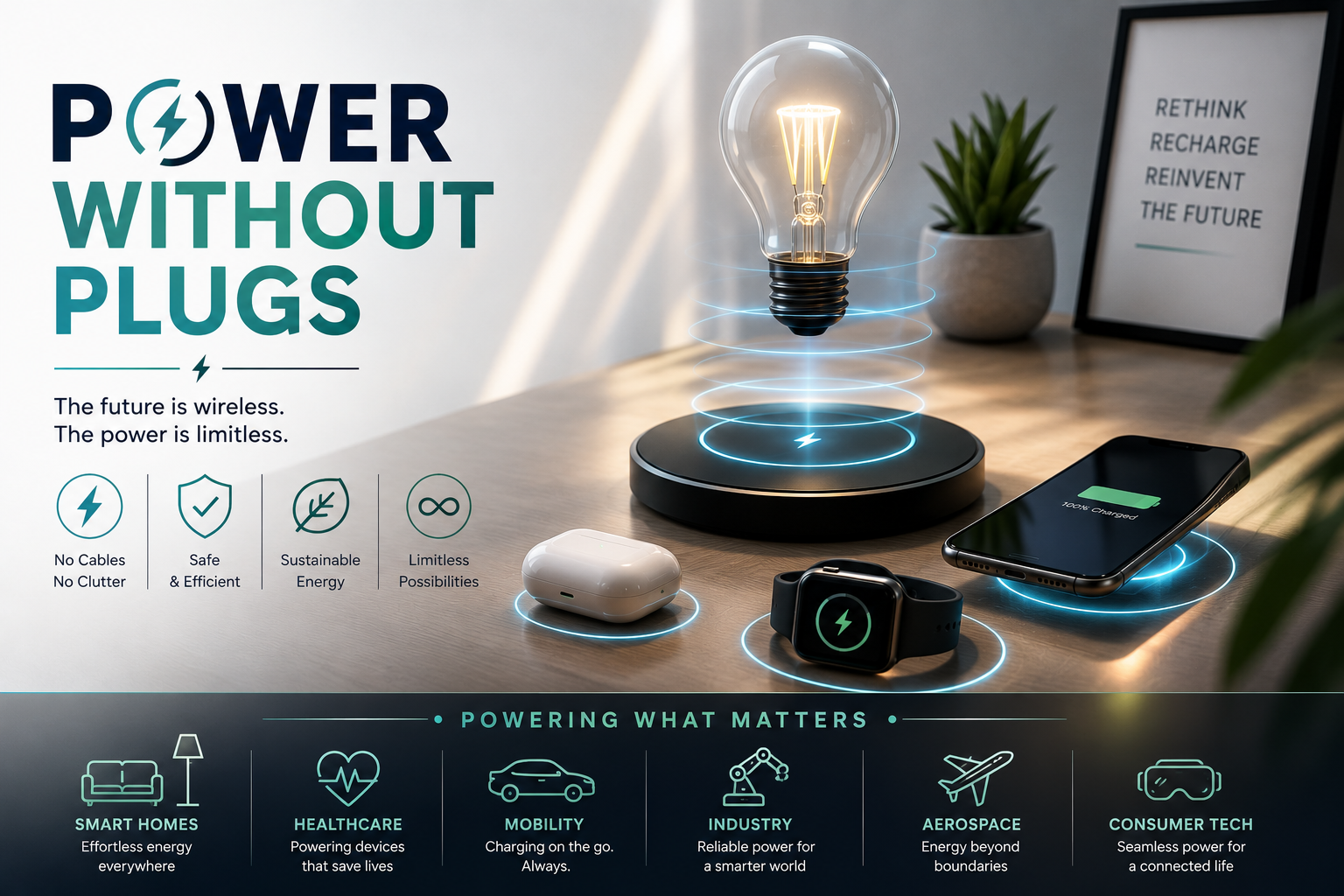
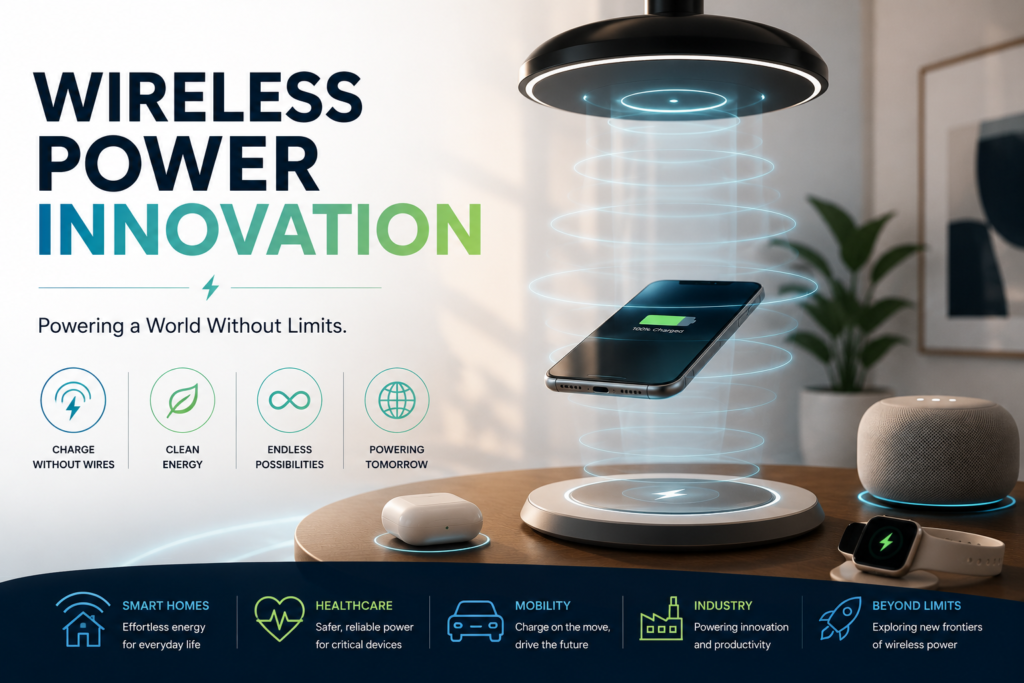
Now imagine a different reality. Your phone starts charging the moment you place it on your desk. Your earbuds recharge while sitting in your backpack. Your smartwatch quietly powers up while you work, and your electric car gains energy simply by parking in your garage. Charging becomes something that happens automatically, not something you have to remember.
That future is no longer just an ambitious idea. Around the world, scientists and technology companies are developing wireless charging systems that are smarter, faster, and capable of working over greater distances than ever before. While today’s charging pads have introduced us to the convenience of cable-free power, tomorrow’s innovation promise to make charging almost invisible.
The future of wireless charging is not just about replacing cables, it is about changing our relationship with technology itself. As this technology continues to evolve, it would redefine how we use smartphones, wearables, electric vehicles, medical devices, and even entire smart homes.
What Is Wireless Charging?
Wireless charging is the process of transferring electrical energy from a power source to a device without using a physical cable. Most smartphones today use inductive charging, where energy is transferred through electromagnetic fields between two coils—one inside the charging pad and the other inside the device.
Popular standards like Qi wireless charging have made this technology widely available across smartphones, earbuds, smartwatches, and other gadgets.
Although convenient, today’s wireless charging usually requires devices to remain in direct contact with the charging pad. The future aims to remove even that limitation.
Why Wireless Charging Matters
Our lives revolve around rechargeable devices. Phones, tablets, earbuds, laptops, smartwatches, gaming accessories, and even electric vehicles all depends on reliable power.
Traditional charging methods come with several inconveniences:
- Cables wear out over time.
- Charging ports collect dust and become damaged.
- Different devices require different connectors.
- Plugging and unplugging devices becomes repetitive.
Wireless charging offers a cleaner, easier solution while reducing wear on charging ports.
The Next Generation of Wireless Charging
The biggest changes will not simply make charging faster—they will make it almost invisible.
1. True Over-the-air Charging
One of the most exciting developments is long-distance charging.
Instead of placing a phone on a charging pad, future systems may send power through radio waves, infrared light, or other technologies to nearby devices.
Imagine:
- Your phone charging while sitting on your desk.
- Wireless earbuds charging inside your bag.
- Smart home sensors never needing battery replacements.
Although current versions deliver relatively small amounts of power, researchers continue improving efficiency and safety.
2. Faster Charging Speeds
One criticism of wireless charging has always been speed.
However, manufacturers are developing systems capable of delivering significantly high power levels.
Future wireless chargers could rival—or even match—today’s wired fast chargers, allowing phones to recharge in minutes rather than hours.
Improved cooling systems and smarter power management will make these higher speeds safer.
3. Charging Multiple Devices Simultaneously
Instead of carefully positioning one device on a charging pad, future chargers could recognize multiple devices automatically.
Picture placing your phone, smartwatch, earbuds, and tablet on the same desk, where each receives the correct amount of power without interference.
Smart charging surfaces could become common in homes and offices.
Wireless Charging for Electric Vehicles
Perhaps the biggest transformation will happen in transportation.
Wireless charging pads installed beneath parking spaces could recharge electric vehicles automatically.
Drivers would simply park and walk away.
Future roads might even include embedded charging technology that powers compatible vehicles while they are moving, extending driving range and reducing charging stops.
While this technology is still in development, it has the potential to make electric vehicle ownership even more convenient.
Smart Homes Without Charging Cables
The smart home of the future may rely heavily on wireless power.
Imagine:
- Security cameras charging continuously.
- Smart speakers never needing power cables.
- Wireless keyboards that never require battery replacements.
- Smart sensors operating for years without manual charging.
Furniture itself could become charging stations.
Coffee tables, kitchen counters, office desks, and bedside tables may all include built-in wireless charging technology.
Smarter Charging Through Artificial Intelligence
Artificial intelligence is expected to play a major role in wireless charging.
Future charging systems may:
- Learn your daily routine.
- Charge devices during cheaper electricity periods.
- Protect battery health by avoiding unnecessary full charges.
- Detect overheating before it becomes dangerous.
- Prioritize devices with low battery levels.
Instead of simply providing power, chargers will become intelligent energy managers.
Charging in Public Spaces
Wireless charging is gradually expanding beyond homes.
Future locations may include:
- Airports
- Coffee shops
- Hotels
- Libraries
- Universities
- Shopping malls
- Restaurants
- Office buildings
Tables, seats, counters, and waiting areas may all provide wireless charging automatically.
Eventually, charging your phone in public could become as common as connecting to Wi-Fi.
Smaller Devices Will Benefit Too
Future wireless is not only about smartphones.
Many everyday devices could benefit, including:
- Hearing aids
- Fitness trackers
- Medical sensors
- Smart glasses
- Digital pens
- Computer mice
- Remote controls
- Portable gaming devices
Removing charging ports allows manufacturers to create slimmer, more water-resistant products with fewer points of failure.
Environmental Benefits
Wireless charging may also contribute to sustainability.
Potential benefits include:
- Fewer discarded charging cables.
- Less electronic waste.
- Longer-lasting device ports.
- More durable electronic products.
- Better energy management in smart homes.
As technology becomes more efficient, wireless charging systems could reduce unnecessary energy consumption while supporting renewable energy integration.
Challenges That Still Need Solving
Despite its promise, wireless charging still faces several obstacles.
Efficiency
Wired charging generally transfers energy more efficiently than wireless charging. Engineers continue working to minimize energy loss.
Heat
Wireless charging can generate more heat than traditional charging. Better cooling technologies are important for faster charging speeds.
Cost
Advanced wireless charging systems remain relatively expensive. As production scales up, prices are expected to fall.
Compatibility
Not every device supports the the same wireless charging standards. Greater industry cooperation will improve compatibility across brands.
Long-Distance Power
Charging devices several feet away remains technically challenging. Improving efficiency while maintaining safety is one of the industry’s biggest goals.
Industries That Will Benefit
Wireless charging could transform many sectors beyond consumer electronics.
Healthcare could use continuously powered medical sensors and wearables monitors.
Manufacturing facilities may power autonomous robots without frequent battery changes
Retail stores could deploy battery-powered electronic shelf labels and smart inventory sensors that recharge automatically.
Education may see classrooms equipped with wireless charging desks for laptops and tablets.
Hospitality businesses could offer seamless charging experiences in hotels, restaurants, and lounges.
What the Next 10 Years Could Look Like
By the mid-2030s, wireless charging could become as common as Wi-Fi is today.
You may see:
- Homes designed with built-in charging surfaces.
- Officers where every desk provides wireless power.
- Airports with wireless charging throughout waiting areas.
- Cars that recharge automatically while parked.
- Wearable device that rarely need manual charging.
- Smart cities equipped with public wireless power infrastructure.
While charging cables may not disappear completely, they could become backup tools rather than everyday necessities.
While Charging Cables Ever Disappear?
Probably not entirely.
High-performance laptops, professionals equipment, and some industries devices may still rely on wired charging for maximum speed and efficiency.
However, for everyday gadgets such as phones, earbuds, smartwatches, and many portable devices, wireless charging is likely to become the preferred method.
As technology improves, plugging in a cable may feel as outdated as connecting to the Internet with a dial-up modem.
Final Thoughts
Wireless charging has already changed how we power our devices, but its greatest innovations are still ahead. Faster speeds, longer-range charging, intelligent power management, and seamless integration into homes, workplaces, vehicles, and public spaces are all moving from research labs toward everyday reality.
The transition will not happen overnight. Engineers still need to overcome challenges related to efficiency, cost, and long-distance power transfer. Yet the direction is clear: the future of charging is becoming increasingly effortless.
In the coming year, charging may no longer be something we actively do. Instead, our devices will simply stay powered in the background, allowing us to focus less on battery life and more on how we use technology. As wireless charging continues to evolve, convenience will not just improve—it will become nearly invisible, quietly powering the connected world around us.